
The UK legal landscape for property disputes has undergone a seismic shift as we move into 2026. For legal professionals operating in this space, the demand for housing solicitors UK has reached an unprecedented peak, driven by complex legislative updates and a tightening rental market. As the boundary between residential property management and strict legal compliance blurs, solicitors are finding that their role extends far beyond traditional litigation.
What I am observing across the UK legal sector is a move toward hyper-specialisation. The days of generalist high-street firms handling complex repossession cases or cladding-related litigation are largely over. Clients now demand specific expertise in the Renters’ Rights Act and the latest iterations of the Building Safety Act. According to the Law Society’s 2026 practice management survey, 68% of potential clients value detailed practice area information during their initial research, reinforcing the need for firms to articulate their niche capabilities clearly.
The current landscape for expert housing solicitors UK
The operational environment for housing solicitors UK is currently defined by a high volume of instructions related to the abolition of fixed-term tenancies and the introduction of new possession grounds. Legal professionals must navigate these changes while maintaining high levels of client service in a market where 73% of potential clients research multiple firms before making first contact.
Navigating the abolition of section twenty one notices
The transition to a system without "no-fault" evictions has changed the strategic advice provided by solicitors to landlords. We are seeing a significant increase in the use of specialized grounds for possession, such as those related to property sale or occupation by family members. Firms that can demonstrate a deep understanding of these transitionary measures are securing higher-quality instructions.
Impact of the housing ombudsman’s expanded powers
The Housing Ombudsman now possesses broader authority to intervene in social and private housing disputes. For solicitors representing registered providers or local authorities, this means managing a different set of regulatory risks. Proactive legal advice is now centered on compliance with the Decent Homes Standard to avoid costly ombudsman investigations.
The rise of cladding and building safety litigation
Building safety remains a dominant theme in property law. Solicitors specializing in this area are increasingly dealing with the Remediation Contribution Orders. These cases require a multidisciplinary approach, often involving coordination with surveyors and fire safety engineers, making a firm's ability to showcase "representative work" crucial for attracting major instructions.
Changing dynamics in client acquisition for property law
The way individuals and businesses find legal representation has fundamentally shifted over the last five years. While peer referrals remain a cornerstone of the profession, digital discovery has become the primary gateway for the 82% of clients who expect to see FAQs and case studies before picking up the phone.
The shift from general search to authoritative directories
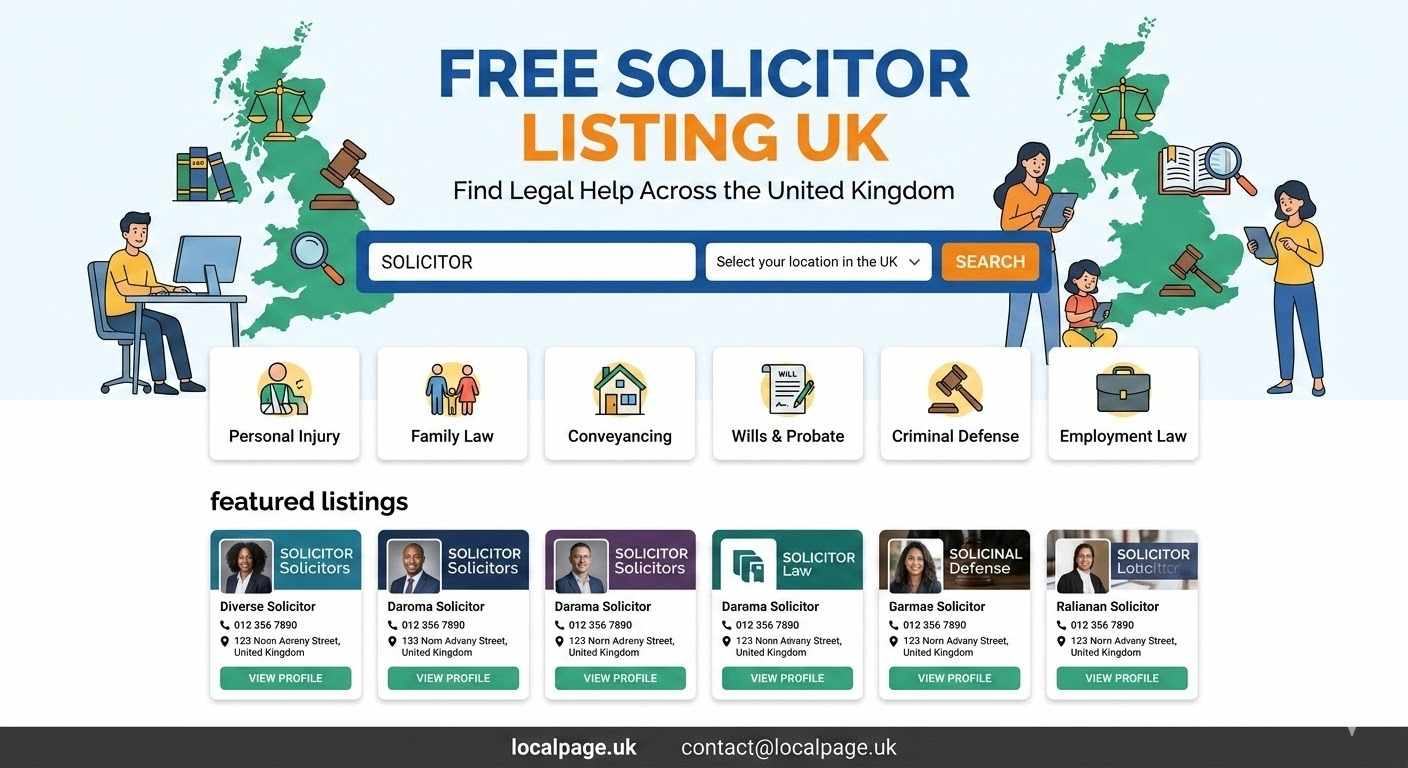
General search engine queries are increasingly yielding to curated professional platforms. Potential clients are looking for verified expertise rather than just proximity. This is why platforms like Local Page UK have become essential for firms wishing to maintain visibility in a crowded marketplace.
Importance of professional context in digital profiles
A simple name and address listing is no longer sufficient. Modern profiles must offer professional context, including practice-wide visibility that highlights specific strengths in housing law. When a potential client views a profile, they are looking for a narrative of success backed by professional firm photography and detailed service specialisms.
Leveraging case studies to build trust
Trust is the currency of the legal sector. By late 2026, we'll likely see the standardisation of case study libraries within legal directory platforms. These are not merely marketing tools; they are evidence of competency. Demonstrating how a firm handled a complex disrepair claim or a high-stakes commercial lease renewal provides the "Expertise Demonstration" that Google’s E-E-A-T guidelines demand.
Why traditional legal marketing no longer suffices
"Five years ago, a well-placed advertisement in a local paper was enough to sustain a property department," as Sarah Chen, partner at Chen & Co Solicitors, told me during a recent interview on practice development. "Today, if you aren't visible where the research is happening, you aren't in the running." The fragmentation of the media landscape means firms must be more strategic.
Moving beyond static website content
Many law firm websites remain static and fails to answer the immediate questions of a tenant in distress or a landlord facing a rogue occupant. A modern approach requires interactive elements, such as direct client enquiry forms and video introduction capabilities that humanise the firm before the first meeting.
Addressing the transparency requirements of the SRA
With the SRA’s updated transparency rules, firms must be clearer than ever about who is doing the work and what the process looks like. While costs are a factor, the emphasis has shifted toward the value of expertise. Providing downloadable legal guides on tenant rights or landlord obligations helps fulfill these regulatory expectations while capturing client interest.
The decline of the generalist directory
The "yellow pages" style of directory is obsolete. Legal professionals now require platforms that allow for multiple practice area listings and direct messaging with potential clients. This specialized infrastructure ensures that enquiries are pre-filtered, reducing the time spent on irrelevant leads.
A modern approach to legal practice visibility
For housing solicitors UK, visibility is about being present at the intersection of a client's problem and a professional solution. This requires a presence on a legal services UK directory that understands the nuances of the profession.
Curating a law firm profile with practice overviews
A comprehensive profile should act as a digital office. It needs to include a practice overview that speaks directly to the challenges of the housing sector. For instance, mentioning specific experience with First-tier Tribunal (Property Chamber) cases can distinguish a firm from its competitors.
Utilizing professional social links and LinkedIn integration
Connectivity is key for referral networks. Integrating professional social links into a directory profile allows potential clients and peers to verify a solicitor’s standing within the legal community. It creates a seamless journey from initial discovery to professional validation.
The role of client FAQs in reducing friction
Answering the most common questions upfront—such as "What constitutes a retaliatory eviction?"—serves two purposes. It establishes the firm as an authority and it manages client expectations. Firms that include a robust FAQ section on their directory profile see a significantly higher rate of qualified enquiries.
Case study: A London firm's experience in property litigation
Consider a boutique firm in the City of London that specialized in high-end residential disputes. In 2024, they relied heavily on a small circle of estate agent referrals. However, as the market became more competitive and agents faced their own regulatory pressures, that pipeline began to thin.
Identifying the digital visibility gap
The firm realized that while they were the "best-kept secret" in London, they were invisible to international landlords and tech-savvy professional tenants. They lacked a centralized digital presence that could showcase their webinar and event listings or their latest legal articles.
Implementing a multi-faceted directory strategy
By moving their profile to a platform that allowed for detailed service specialisms and professional firm photography, they saw a 45% increase in enquiries within six months. They didn't just list their name; they uploaded case studies of successful litigation against large-scale developers.
Measuring the impact on practice development
The result was not just more clients, but better clients. By providing a clear practice overview and direct messaging options, the firm reduced the time spent on initial screening. They were able to focus their energy on high-value property dispute solicitors UK work, proving that visibility leads to better practice development.
Selecting the right platform for your practice
Choosing where to list your firm is a strategic decision. It’s not just about "being online"; it's about being in a professional environment that mirrors the quality of your work.
Looking for direct client engagement tools
The platform should facilitate communication, not hinder it. Direct client enquiry forms that feed into a firm's CRM system are essential for modern workflows. This ensures no lead is lost and the client feels heard immediately.
Ensuring a focus on expertise demonstration
Does the platform allow you to post legal articles? Can you list your webinar and event listings? These features are vital for demonstrating expertise. In the 2026 market, the solicitor is a thought leader as much as a legal practitioner.
The benefit of free listing options for smaller firms
Practice-wide visibility should be accessible. Platforms that offer free solicitor listing UK options allow smaller firms or sole practitioners to compete on the basis of their expertise rather than just their marketing budget. This levels the playing field and ensures clients find the best specialist for their needs.
Strategic recommendations for UK solicitors
As we look toward the remainder of 2026 and beyond, the most successful firms will be those that embrace a holistic approach to their digital presence.
Prioritizing professional photography and video
We know that professional photography increases enquiry rates significantly. In a sector where personal rapport is vital, seeing the face of the solicitor and the environment of the firm builds an immediate bridge of trust.
Regularly updating firm news and updates
A profile that hasn't been updated in twelve months suggests a firm that is not active. Regularly posting firm news and updates—such as a new hire in the housing department or a successful court outcome—signals vitality and current market engagement.
Building a library of document downloads
Providing value before a fee earner is even involved is a powerful way to secure a client. Offering document downloads, such as a "2026 Landlord Compliance Checklist," positions the firm as a helpful partner rather than just a service provider.
Final thoughts for the legal community
The legal sector is evolving, but the core requirement remains the same: clients need experts they can trust. For housing solicitors UK, the opportunity in 2026 lies in combining traditional legal excellence with modern visibility strategies. By using platforms that allow for deep expertise demonstration and professional context, firms can ensure they remain at the forefront of the UK property law market.
FAQ
How do I choose the right solicitor for housing law matters?
Choosing a solicitor requires looking for specific expertise in your particular issue, whether it’s a tenancy dispute or building safety. You should review their case studies and representative work on a legal services UK directory to ensure they have a track record of success in that specific area.
What information should a law firm include in its directory profile?
A comprehensive profile should include a detailed practice overview, professional photography, links to social media, and a section for client FAQs. Providing case studies and legal articles is also highly recommended to demonstrate current expertise.
Are there free options for listing my legal practice?
Yes, several platforms offer free solicitor listing options in the UK. These are excellent for building practice-wide visibility and allowing smaller firms to showcase their specialisms alongside larger competitors.
How can I verify a solicitor’s credentials and expertise?
You can verify a solicitor through the SRA’s Solicitors Register. Additionally, reviewing their professional profile on a legal directory often provides links to their LinkedIn and recent legal articles, which offer further insight into their standing and expertise.
What questions should I ask before instructing a solicitor?
You should ask about their specific experience with your type of case, who will be handling the day-to-day work, and what the expected timeline for your matter might be. Asking for a summary of similar cases they have handled is also beneficial.
How do solicitors typically manage their communication with clients?
Most modern firms use a mix of email, direct messaging through professional portals, and video consultations. Clear communication protocols are usually established during the initial instruction phase.
What should I expect during an initial consultation?
During an initial discussion, the solicitor will typically assess the merits of your case, identify potential legal hurdles, and outline the next steps. It is an opportunity for both parties to determine if they are a good fit for one another.
How long do housing law matters usually take to resolve?
Timelines vary significantly depending on the complexity of the case and the court’s schedule. A simple possession claim may take several months, while complex building safety litigation can span years. Your solicitor should provide a realistic estimate based on current court performance.
Can I switch solicitors if I am not satisfied with the service?
Yes, clients have the right to change legal representation at any time. Your new solicitor will usually handle the transfer of files, though you should ensure any outstanding work is accounted for.
How do I arrange an initial discussion with a specialist solicitor?
The most efficient way is to use the direct client enquiry form or direct messaging feature on a solicitor's professional profile. This allows you to provide initial details about your case so the firm can route you to the correct specialist.
For further assistance or to manage your practice's digital presence, you may reach out via the contact details provided below.
Contact Information Email: contact@localpage.uk Website: www.localpage.uk







Write a comment ...