
The landscape of the British legal sector is undergoing a profound shift as we move through 2026. For the modern practitioner, the challenge is no longer merely about maintaining technical excellence but ensuring that excellence is visible to a discerning, research-heavy market. Identifying and ranking the top law firms UK for professional legal services now requires an analysis of digital authority, client engagement protocols, and the ability to demonstrate specialized expertise before a single billable hour is logged. In an era where trust is the primary currency, the methodology for practice development has moved beyond traditional networking into a sophisticated ecosystem of verified credentials and strategic visibility.
What I am observing across the UK legal sector is a departure from the "generalist" facade. The firms currently dominating the market are those that have embraced hyper-specialisation, providing deep-dive insights into their specific practice areas long before a client initiates contact. This evolution is driven by a client base that is more informed than ever, with many individuals and corporate entities spending hours cross-referencing firm profiles, case studies, and professional social links before selecting a representative.
The state of top law firms UK for professional legal services in 2026
The current year has solidified a trend that began several years ago: the democratization of legal authority. While the "Magic Circle" and "Silver Circle" firms maintain their prestige through historical weight, a new tier of agile, tech-enabled firms is challenging the status quo. These firms prioritize transparency and accessibility, aligning their digital presence with the expectations of a 2026 audience. According to the Law Society’s 2026 practice management survey, 73% of potential clients research multiple solicitors before contact, highlighting the necessity for a robust online footprint.
Evolution of the solicitor client relationship
The traditional dynamic of the solicitor-client relationship has been inverted. Historically, clients relied on word-of-mouth or physical proximity. Today, the initial stage of the relationship is entirely digital. Clients seek to understand the "personality" of a firm through professional firm photography and video introduction capability. They are looking for a sense of shared values and demonstrated success in niche areas, such as property dispute solicitors UK or intellectual property specialists.
Regulatory impacts on practice visibility
With the SRA’s updated transparency rules, firms are now required to be more explicit about their processes and areas of expertise. This has inadvertently benefited firms that utilize comprehensive legal services UK directories. By providing detailed service specialisms and client FAQs section, firms not only comply with regulatory spirit but also build the "Expertise" component of the E-E-A-T framework.
Geographic shifts in legal hubs
While London remains the epicentre, we are seeing significant growth in regional hubs. The rise of "North-shoring" has led to an increase in the prominence of law firms in Manchester and Leeds. These firms often provide the same level of professional legal services as their London counterparts but with a focus on regional economic drivers like tech-manufacturing or northern real estate development.
The rise of specialized boutique firms
Boutique firms are increasingly outperforming larger full-service entities in specific sectors. By focusing exclusively on one or two areas, such as employment law or tax litigation, these firms can provide a depth of content—including legal articles demonstrating expertise—that generalist firms simply cannot match.
Impact of remote working on firm structures
The transition to permanent hybrid models has allowed firms to recruit top-tier talent regardless of geography. This has led to the emergence of "virtual" law firms that maintain a high-prestige digital presence while minimizing physical overhead. This model relies heavily on direct messaging with potential clients and secure document downloads for legal guides.
Integration of artificial intelligence in client intake
AI is no longer a future prediction; it is an active tool in 2026. Top firms are using intelligent intake forms that categorize potential enquiries by practice area, ensuring that a commercial litigation UK specialist receives only relevant leads, thereby reducing time spent on irrelevant enquiries.
Cultural shifts within the partnership model
The younger generation of partners is more inclined toward digital transparency. As Sarah Chen, partner at Chen & Co Solicitors, told me, "Five years ago, we relied on a static website and a listing in a printed directory. Today, we view our digital profile as a living entity that requires constant updates with firm news and case studies."
How client acquisition has changed for legal professionals
The journey from "unaware" to "instructing" has become a non-linear path. In 2026, the primary objective of any practice development strategy is to be present at every research touchpoint. The data is clear: 68% of clients value detailed practice area information during their initial research phase. If a firm’s profile lacks depth, it is discounted almost immediately. This has made the free solicitor listing UK more than just a directory entry; it is a critical piece of market real estate.
The psychology of the modern legal consumer
Modern consumers of legal services are conditioned by their experiences in other sectors. They expect ease of use, immediate access to information, and clear evidence of capability. The presence of a client FAQs section or a library of case studies and representative work acts as a psychological safety net, confirming that the firm has handled similar matters successfully in the past.
Data driven decision making in law firms
Top firms are now using analytics to understand which practice areas are generating the most interest. By observing engagement with specific legal articles, firms can pivot their content strategy to address emerging trends, such as ESG compliance or digital asset disputes.
Importance of professional visual assets
Visual communication has moved to the forefront of legal marketing. High-quality professional firm photography and video content are no longer optional extras. Statistics suggest that firms with professional imagery see a significant increase in enquiry rates compared to those using stock photography or low-resolution images.
Building trust through representative work
A list of previous successes is no longer enough. Clients want to see the narrative of a case. Detailed case studies that explain the challenge, the legal strategy employed, and the ultimate outcome (without breaching confidentiality) are essential for building trust before initial contact.
Utilizing webinars and events for lead generation
Live interaction remains a powerful tool. Firms that host webinar and event listings on their profiles can position their solicitors as thought leaders. These events provide a platform for demonstrating expertise in real-time, allowing potential clients to evaluate a solicitor's communication style.
The role of social proof in legal selection
LinkedIn has become the "professional pulse" of the legal industry. Linking a firm's directory profile to professional social links allows potential clients to see the wider context of a solicitor’s career, their peer interactions, and their contributions to legal discourse.
Reducing friction in the enquiry process
Direct client enquiry forms that are integrated directly into a firm's practice management software are becoming the standard. By reducing the number of steps required to ask a question, firms can capture interest at the moment it is highest.
Why traditional legal directories no longer suffice
The "Yellow Pages" model of legal directories is obsolete. In the past, a simple name and phone number were sufficient. Today, a directory must function as a comprehensive practice overview. If a platform does not allow for multiple practice area listings or the hosting of legal guides, it fails to meet the needs of the 2026 legal consumer. The market now demands a legal services business listing UK that offers a multi-dimensional view of the practice.
The shift from listing to engagement
A modern directory is an engagement platform, not just a list. It facilitates direct messaging and the downloading of resources. When a firm provides document downloads like "A Guide to Commercial Leases," they are providing value before asking for instruction. This builds a "reciprocity" bond with the potential client.
SEO advantages of comprehensive profiles
Search engines in 2026 prioritize "helpfulness." A directory profile that includes detailed service specialisms and regularly updated legal articles will naturally rank higher than a sparse, static page. This organic visibility is essential for firms looking to compete for high-intent keywords like conveyancing solicitors UK.
Fragmentation of the legal market
As the law becomes more complex, the market has fragmented into thousands of sub-specialisms. Traditional directories cannot handle this granularity. Modern platforms allow for specific tagging, ensuring that a client looking for "niche pharmaceutical patent litigation" finds exactly that, rather than just a general "intellectual property" lawyer.
Integrating news and updates
Law is a fast-moving field. A directory profile that includes a section for firm news and updates shows that the practice is active and engaged with current legal developments. This is particularly important for areas like employment law, where case law changes frequently.
The value of peer networking
Directories aren't just for clients; they are for other lawyers. Referral networks are a significant source of business for top law firms. A professional profile allows a family solicitors UK specialist to find a trusted tax lawyer for a high-net-worth divorce case, fostering professional peer networking.
Accessibility and inclusivity
Modern platforms ensure that legal services are accessible to all. By offering free listing options, directories ensure that even sole practitioners or small high-street firms can compete for visibility alongside national giants.
Standardizing firm information
A major frustration for clients is the inconsistency of information across different sites. A centralized, well-maintained law firms UK profile serves as the "single source of truth" for a firm's contact details, credentials, and service offerings.
A modern approach to legal practice visibility
Achieving visibility in 2026 requires a multi-channel strategy where a firm's directory profile acts as the central hub. All other activities—social media, speaking engagements, and traditional advertising—should drive traffic back to a detailed practice overview. This ensures that when a potential client arrives, they are met with a professional context that reinforces the firm’s authority.
Creating a cohesive brand narrative
A law firm’s brand is more than its logo. It is the collective expertise of its partners and the quality of its client interactions. A modern profile allows a firm to curate this narrative through video introductions and detailed "About Us" sections that highlight the firm's history and mission.
Leveraging the expertise demonstration
Trust is built through the demonstration of knowledge. By publishing legal articles on their directory profile, solicitors can answer common client questions before they are even asked. This positions the solicitor as a helpful guide rather than just a service provider.
Enhancing the user experience
The "User Experience" (UX) of a firm’s digital presence reflects the expected "Client Experience" (CX). A profile that is easy to navigate, with clear headings and accessible contact forms, suggests that the firm itself will be organized and responsive.
Optimizing for mobile research
With more legal research happening on mobile devices, directory profiles must be fully responsive. A client sitting in a cafe researching personal injury solicitors UK needs a profile that loads quickly and presents information clearly on a small screen.
Using client FAQs to address objections
Most clients have the same initial concerns: "How long will this take?" or "What are the first steps?" By addressing these in a client FAQs section, firms can lower the barrier to enquiry and demonstrate that they understand the client’s perspective.
Showcasing firm culture
While technical skill is paramount, "cultural fit" is often the deciding factor in long-term legal relationships. Professional photography of the team in their working environment helps humanize the firm and makes it more approachable.
Building a library of legal guides
Offering document downloads such as "The 2026 Guide to Probate" serves two purposes: it provides immediate value to the client and it captures interest from individuals who are in the "early awareness" stage of their legal journey.
Case study: A London firm’s experience
What I'm observing across the UK legal sector is that those who adapt earliest reap the greatest rewards. Consider a mid-sized firm based in Holborn. Historically, they relied on their reputation for business solicitors UK. However, as the market shifted, they noticed a decline in enquiries from new industries like Fintech and Green Energy.
Identifying the visibility gap
The firm realized that while they had the expertise, they were not visible where the new generation of founders was looking. Their website was professional but lacked the engagement tools—like direct messaging and video introductions—that younger entrepreneurs expect.
Implementing a digital first strategy
They decided to overhaul their presence on a major solicitor directory free listing UK. They moved beyond a basic listing to create a comprehensive firm profile with practice overviews for each of their niche departments.
Results and market feedback
Within six months, the firm saw a 40% increase in qualified enquiries. By using their profile to host webinars on "Regulatory Challenges in Fintech," they attracted clients they previously couldn't reach. The inclusion of a detailed client FAQs section reduced the time their junior associates spent on basic intake calls by 15%.
Strategic use of representative work
The firm began publishing anonymized case studies of their work with startups. This provided concrete evidence of their capability in the "New Economy," which was previously missing from their traditional marketing materials.
Integration of LinkedIn profiles
By linking the individual profiles of their partners, they allowed potential clients to see the "human faces" behind the legal advice. This significantly increased the conversion rate from profile view to enquiry.
Feedback from the client base
Client feedback indicated that the "video introduction" was a major factor in their decision to get in touch. Being able to hear a partner speak about their approach to litigation made the prospective clients feel more comfortable before the first meeting.
Long term growth and referral stability
The firm’s new visibility didn't just bring in direct clients; it also strengthened their referral network. Other law firms UK began to reach out for co-counsel opportunities after seeing their specialized content.
Selecting the right platform for your practice
Not all directories are created equal. When choosing where to host your firm’s professional legal services profile, it is vital to look for platforms that offer a comprehensive suite of features. The platform should not just be a list, but a practice development tool that helps you build a professional context and attract relevant, qualified enquiries.
Essential features for legal profiles
A high-quality platform must support multiple practice area listings and offer robust SEO benefits. It should also include tools for expertise demonstration, such as a blog or article hosting section, and engagement tools like direct client enquiry forms.
Evaluating the platform’s authority
Look for platforms that are themselves recognized as authorities in the legal sector. A listing on a site that is frequently cited by the Law Society or Legal Futures will pass on more "trust signals" to your firm than a generic business directory.
Ease of profile management
Your digital presence should be easy to update. A platform that allows you to quickly add firm news and updates or change your professional firm photography ensures that your profile never looks "stale."
Considering the cost of inaction
While many firms worry about the time required to maintain a profile, the cost of not being present in the digital marketplace is far higher. In 2026, being invisible is equivalent to being out of business for many practice areas.
Leveraging free listing options
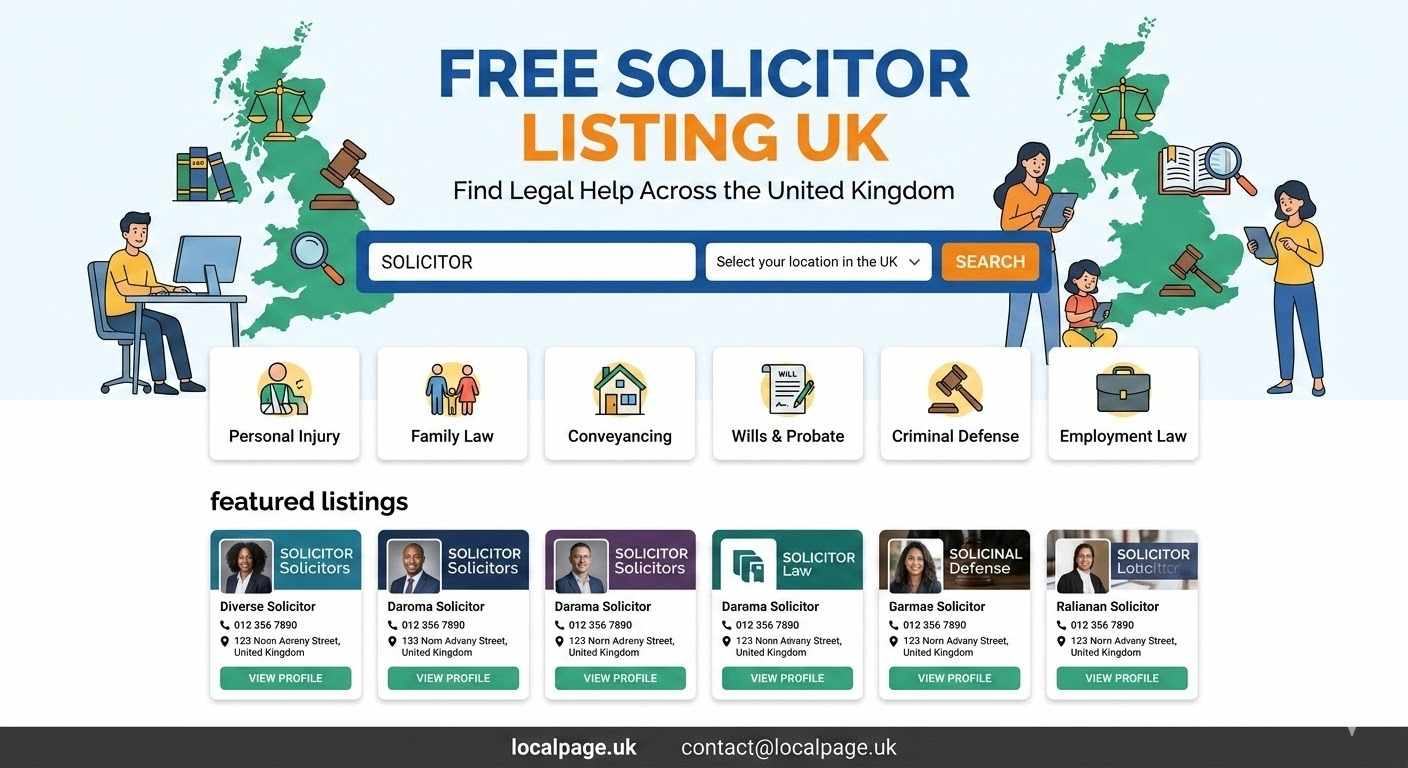
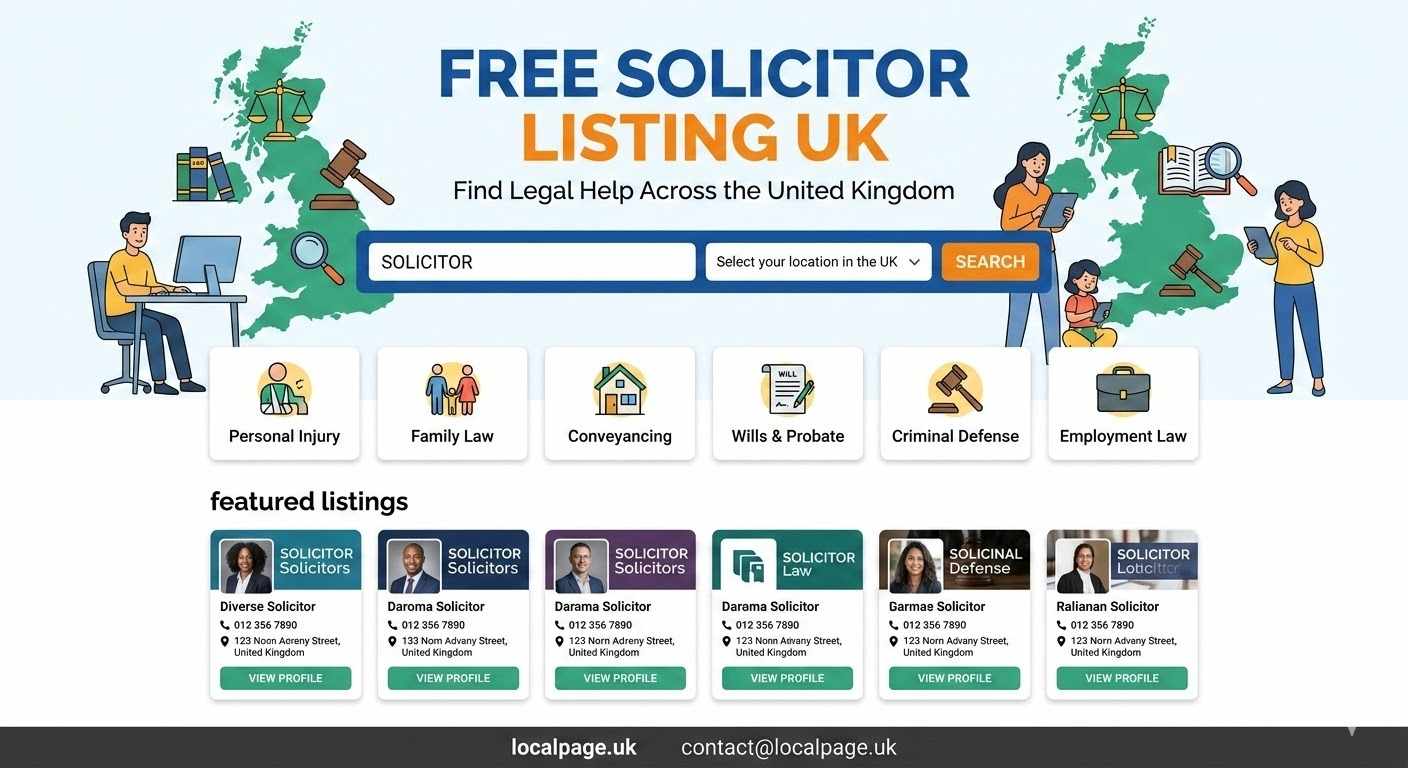
For smaller firms or those just starting a digital transformation, utilizing a free legal services directory UK is an excellent way to begin building visibility without upfront commitment.
Verification and credentials
Ensure the platform has a robust system for verifying solicitor credentials. This protects the integrity of the directory and ensures that clients can trust the information they find there.
Support for multimedia content
In a video-first world, the ability to host video introductions and webinar recordings is a significant competitive advantage. Choose a platform that allows you to showcase your solicitors’ communication skills.
Strategic recommendations for UK solicitors
As we look toward the remainder of 2026 and beyond, the path for UK solicitors is clear: you must become your own media channel. Your expertise is your most valuable asset, and your directory profile is the stage upon which you demonstrate it. By providing deep, helpful content and engaging with potential clients through modern digital tools, you can ensure your practice remains at the top of the UK legal sector.
Audit your current digital presence
Start by looking at your firm through the eyes of a potential client. Does your current profile provide a practice-wide visibility? Are your professional social links up to date? If you were a client, would you instruct your firm based on what you see online?
Invest in high quality content
Move beyond generic "legal updates." Produce legal articles that solve real problems. Use your client FAQs section to address the actual anxieties your clients face. This is how you build a professional first impression that lasts.
Embrace the role of technology
Don't fear AI or automated enquiry forms; use them to free up your time for high-value legal work. By using a modern solicitor directory, you can automate the initial stages of the client journey while still providing a personal touch through video and direct messaging.
Prioritizing client education
The most successful firms in 2026 are those that act as educators. By providing document downloads and guides, you empower your clients, which in turn builds a deeper level of trust and loyalty.
Developing a consistent update schedule
Set a calendar for firm news and updates. Whether it’s a new hire, a successful case, or a comment on a new piece of legislation, keeping your profile active signal to the market that your firm is thriving.
Encouraging partner participation
Practice development is no longer just the job of the marketing department. Every partner should have a high-quality professional profile that is linked to the firm’s main directory page.
Monitoring and adapting
Use the data provided by your directory platform to see what’s working. If your immigration lawyers UK section is getting more hits than your corporate law section, consider reallocating some of your content efforts to double down on that success.
FAQ
How do I choose the right solicitor for professional legal services matters?
Choosing the right solicitor involves researching their specific expertise in the area of law relevant to your needs. In 2026, you should look for firms that provide detailed case studies and representative work on their profiles. It is also beneficial to watch any video introductions to see if their communication style matches your expectations.
What information should a law firm include in its directory profile?
A comprehensive profile should include a detailed practice overview, professional firm photography, and multiple practice area listings. To build trust, firms should also include a client FAQs section, legal articles demonstrating expertise, and professional social links like LinkedIn.
Are there free options for listing my legal practice?
Yes, many high-quality directories offer a free lawyer listing UK which allows firms of all sizes to maintain a presence. These platforms often provide the option to add law firm to directory UK free, ensuring that the legal market remains competitive and accessible.
How can I verify a solicitor's credentials and expertise?
You can verify a solicitor's credentials through the Solicitors Regulation Authority (SRA) or the Law Society’s "Find a Solicitor" service. Additionally, a professional directory like Local Page often includes verified badges or links to the solicitor's regulatory record.
What questions should I ask before instructing a solicitor?
You should ask about their experience in your specific legal matter, who will be handling your case on a day-to-day basis, and what the expected timeline for your case is. It is also wise to ask for a summary of their representative work in similar cases.
How do solicitors typically structure their fees?
While fees vary significantly based on the complexity of the matter and the seniority of the solicitor, most firms offer a range of structures including fixed fees for standard tasks (like conveyancing) or hourly rates for more complex litigation. Always ensure you receive a clear engagement letter outlining the financial arrangement.
What should I expect during an initial consultation?
During an initial discussion, the solicitor will listen to the facts of your case, provide a preliminary assessment of your legal position, and explain the next steps. This is also an opportunity for you to evaluate if you feel comfortable working with them.
How long do professional legal services matters usually take?
The duration depends entirely on the practice area. A simple house sale might take 8-12 weeks, while complex commercial litigation can span several years. A good solicitor will provide a realistic timeline during your initial consultation.
Can I switch solicitors if I am not satisfied?
Yes, you have the right to change your legal representative at any time. You will need to settle any outstanding fees with your current firm before they release your file to your new solicitor.
How do I arrange an initial discussion with a specialist solicitor?
Most modern firms offer direct client enquiry forms or direct messaging through their directory profiles. This is often the fastest way to get in touch and provide a brief overview of your needs before a formal meeting is scheduled.
For further assistance or to manage your practice's digital presence, you may reach out via the contact details provided below.
Contact Information Email: contact@localpage.uk Website: www.localpage.uk







Write a comment ...