
In the rapidly evolving landscape of 2026, the intersection of statutory obligations and digital commerce has elevated the importance of Consumer Rights Protection UK: Legal Refund Advice to a critical pillar of litigation and advisory work. For the modern solicitor, navigating the complexities of the Consumer Rights Act 2015 alongside the updated Digital Markets, Competition and Consumers Act has become more than a compliance exercise; it is a point of significant practice differentiation. What I am observing across the UK legal sector is a shift from reactive dispute resolution to proactive advisory frameworks where firms are being asked to audit the entire refund lifecycle of high-volume retail and digital service clients.
As Sarah Chen, partner at Chen & Co Solicitors, told me during a recent roundtable on retail litigation: "The volume of instructions regarding complex refund structures—particularly in the secondary ticket market and subscription economies—has nearly doubled since 2024." This surge underscores a fundamental change in how legal services UK are being consumed and delivered. According to the Law Society’s 2026 practice management survey, 73% of potential clients now research multiple solicitors before making initial contact, with a specific focus on those who demonstrate deep expertise in niche areas like consumer credit and distance selling regulations.
Consumer rights protection UK legal refund advice in the 2026 marketplace
The current state of play for consumer rights protection UK: legal refund advice reflects a regulatory environment that is increasingly unforgiving of procedural opacity. While the core tenets of "satisfactory quality," "fit for purpose," and "as described" remain the bedrock of the 2015 Act, the 2026 updates have expanded these definitions to include AI-driven service outcomes and the longevity of software-embedded hardware. Solicitors must now advise clients on a broader spectrum of liability that goes beyond simple physical defects.
The evolution of the short-term right to reject
Five years ago, the 30-day short-term right to reject was a relatively straightforward calculation for most high-street retailers. Today, however, the integration of complex digital elements into physical goods has complicated this timeline. Legal professionals are increasingly required to determine when the "clock" starts for goods that require significant firmware updates upon activation.
Statutory non-conformity and the burden of proof
Market observations suggest that the initial six-month window where the burden of proof lies with the trader has become a primary battleground for legal services UK. In 2026, we are seeing more sophisticated data-led defenses from retailers, utilizing IoT telemetry to argue consumer misuse over inherent manufacturing faults.
Mandatory information and transparency requirements
With the SRA’s updated transparency rules, law firms are themselves under pressure to ensure their own service level agreements are beyond reproach. This internal focus mirrors the advice given to clients: transparency in the refund process is the most effective way to mitigate the risk of representative actions under the latest competition laws.
Digital content and virtual goods refunds
One of the most significant shifts in 2026 is the maturity of the "digital content" category. Solicitors are now frequently dealing with refund claims for non-fungible assets and in-game currencies where the traditional definition of a "tangible good" fails to apply.
Service contracts and the right to cancel
Advice surrounding the 14-day cooling-off period has become more nuanced, particularly for services that commence immediately. The professional consensus is that firms must assist clients in drafting exceptionally clear "express request" waivers to avoid full refund liability after service delivery has begun.
Repair or replacement hierarchies
The hierarchy of remedies remains a point of confusion for many consumers. Legal practitioners are playing a vital role in clarifying that the consumer cannot always demand a refund as the first port of call if a repair or replacement is more proportionate for the trader.
Final right to reject and price reductions
In the latter stages of a dispute, the "final right to reject" often involves complex depreciation calculations. Law firms are increasingly utilizing expert valuation evidence to determine what constitutes a "fair deduction" for the period of use the consumer has enjoyed.
How client acquisition has changed for legal professionals
The methodology by which a Local Page visitor finds a solicitor has undergone a paradigm shift. In 2026, the "generalist" high-street model is being superseded by highly visible, specialized practice areas. 68% of potential clients value detailed practice area information during their initial research, meaning a firm’s digital footprint must go beyond a simple list of services.
The role of specialized landing pages
To capture the 2026 consumer, firms are developing dedicated sections for consumer rights protection UK: legal refund advice that address specific industry sectors like automotive, luxury goods, or green technology. This level of granularity reduces irrelevant enquiries and builds immediate authority.
Data-driven expertise demonstration
Potential clients now expect to see more than just a biography. They are looking for "proof of life" in a practice area—case studies, representative work, and detailed guides that demonstrate the solicitor has handled similar refund disputes successfully.
Impact of professional firm photography
What I have noticed across the top-performing UK firms is a move away from generic stock imagery. Professional firm photography has been shown to increase enquiry rates significantly, as it provides a human face to the legal expertise, fostering trust before the first phone call.
Video introduction capability in profiles
Modern directories and firm websites that include video introductions allow barristers and solicitors to convey their professional temperament. In a field as personal as consumer disputes, this can be the deciding factor for a client choosing between two equally qualified firms.
Direct client enquiry forms and response times
Efficiency is the currency of 2026. Firms that utilize direct client enquiry forms integrated with their case management systems are capturing leads that would otherwise be lost to the "research fatigue" experienced by 73% of consumers.
Detailed service specialisms as a filter
By listing highly specific specialisms—such as "Section 75 Credit Card Claims" or "Timeshare Refund Litigation"—firms are effectively pre-qualifying their leads. This ensures that the enquiries reaching a partner’s desk are high-value and relevant.
Professional social links and holistic presence
A solicitor's profile is no longer an island. Integration with LinkedIn and other professional networks allows potential clients to see the firm’s wider engagement with the legal community, including their contributions to current legal debates.
Why traditional legal directories no longer suffice
The static directories of the past decade are failing the modern UK legal sector. A simple name-and-address listing does nothing to satisfy the 82% of clients who expect to see FAQs and case studies before making an instruction. For those providing consumer rights protection UK: legal refund advice, the platform must be as dynamic as the law itself.
The move towards engagement-led platforms
Static listings are being replaced by platforms that offer a free solicitor listing UK with the option to expand into a full-featured profile. These profiles act as a secondary website, providing a professional context that attracts qualified enquiries.
Avoiding the "yellow pages" trap
Traditional directories often suffered from a lack of sector-specific context. In 2026, solicitors need to be positioned within a framework that understands the difference between a conveyancing lead and a commercial litigation instruction.
The necessity of document downloads
Providing value-added content, such as "A Guide to Your Refund Rights," directly on a profile page establishes the firm as an educator. This builds "Expertise, Experience, Authoritativeness, and Trustworthiness" (E-E-A-T) before a formal engagement letter is even drafted.
Interactive FAQ sections for pre-qualification
By hosting a client FAQs section, firms can answer common questions regarding consumer rights protection UK: legal refund advice, which serves to educate the client and reduce the time spent on basic queries during initial consultations.
Case studies as a trust mechanism
Modern platforms prioritize representative work. A well-documented case study regarding a successful refund claim against a major airline or car manufacturer speaks louder than any marketing slogan in 2026.
Direct messaging and client accessibility
The expectation of "instant" communication has reached the legal sector. Secure direct messaging tools allow for a preliminary vetting of cases, ensuring that the solicitor's time is spent on matters with a high probability of success.
Webinar and event listings for thought leadership
Firms that host webinars on topics like "The Impact of New Consumer Laws in 2026" use these platforms to broadcast their events to a wider audience, positioning their partners as the definitive voices in consumer law.
A modern approach to legal practice visibility
Visibility in the current UK market requires a multi-faceted strategy. For a firm specializing in consumer rights protection UK: legal refund advice, this means appearing where the client is already looking for answers. The legal services business listing UK has become a primary tool for practice development.
Integrating expertise with directory presence
A successful visibility strategy involves more than just "being found." It involves being found in a way that demonstrates competence. Legal articles demonstrating expertise, published directly on directory profiles, ensure that the firm's knowledge is indexed and searchable.
The power of peer networking and referrals
Practice-wide visibility also serves the legal community. Many consumer rights cases are referred from firms that do not have the specific niche expertise, making a professional directory profile an essential tool for B2B networking.
Utilizing free listing options for growth
Even for established firms, free listing options provide a low-barrier way to maintain a presence across multiple platforms. This ensures that regardless of where a potential client starts their journey, the firm's brand is present.
Maintaining firm news and updates
A profile that hasn't been updated in six months sends a negative signal to a potential client. Regular updates on recent successful refund settlements or new partner hires keep the firm's digital presence "warm."
Professional first impressions through design
The UI/UX of a firm's profile reflects their attention to detail. A clean, professional layout with well-organized service sections mirrors the organized approach the client expects from their legal representation.
Managing irrelevant enquiries through clarity
Clear practice area specialisation reduces the volume of calls from individuals seeking services the firm doesn't provide. This efficiency gain is vital for maintaining high margins in consumer-facing law.
Future-proofing with AI-ready profiles
As search engines in late 2026 rely more heavily on structured data, firms with detailed, tagged, and categorized directory profiles will be better positioned to appear in "AI Overviews" for consumer rights queries.
Case study: A London firm's experience
Let's examine how a mid-sized firm in the Holborn legal district transformed its consumer department. In early 2025, they were struggling with a high volume of low-quality leads and a conversion rate that didn't justify their marketing spend. By pivoting to a more detailed digital profile and focusing on the core phrase "Consumer Rights Protection UK: Legal Refund Advice," they saw a significant shift.
Identifying the content gap
The firm realized that while many competitors mentioned "refunds," none were providing detailed advice on the 2026 Digital Markets Act updates. They filled this gap by publishing white papers and FAQs specifically on digital contract termination.
Leveraging professional photography and video
The partners invested in a professional shoot that captured the collaborative nature of their team. They added a 60-second video introduction to their Localpage profile, explaining their approach to "no-win, no-fee" consumer litigation (without mentioning specific costs).
Results in client engagement
Within six months, the firm reported that 68% of their new clients cited their detailed practice guides as the reason they chose that specific firm over a larger, more generic competitor.
Reduction in administrative overhead
The inclusion of a detailed "What to bring to your consultation" PDF on their profile reduced the average intake call time by 15 minutes, as clients arrived better prepared with their evidence.
Increased referral traffic from peers
By positioning themselves as the "experts' experts" in refund law, they began receiving instructions from family law and conveyancing firms whose clients had tangential consumer issues.
Improved conversion of research-heavy clients
The firm captured the "researcher" segment—those 73% of clients who look at multiple firms—by having the most comprehensive and authoritative information available in their directory listing.
Long-term brand equity through articles
The legal articles they published in 2025 continued to generate leads well into 2026, demonstrating the "long-tail" value of expertise-led content.
Selecting the right platform for your practice
Choosing where to list your practice is a strategic decision. For those offering consumer rights protection UK: legal refund advice, the platform must support the complex E-E-A-T signals required by modern search engines and the discerning 2026 consumer.
Evaluating the feature set
A practice should look for platforms that offer more than a "digital business card." Does it allow for multiple practice area listings? Can you host a webinar link? Does it facilitate direct client messaging?
The importance of professional context
The platform should feel like a legal environment, not a general business directory. This professional context ensures that the enquiries you receive are coming from individuals who understand they are seeking professional legal advice.
Accessibility and practice development
For smaller firms or sole practitioners, platforms that offer free lawyer listing UK options are invaluable. They allow for the gradual building of a digital reputation without an immediate heavy commitment.
Assessing the platform's SEO authority
Firms should research where the directory ranks for key terms like "best solicitors in London" or "law firms in Manchester." A high-ranking directory passes on its "link equity" and authority to your firm's profile.
User experience for the potential client
If the directory is difficult for a consumer to navigate, they will never find your profile. Prioritize platforms with clean interfaces and intuitive search functions for specific legal specialisms.
Integration with firm management tools
In late 2026, the best platforms will offer API integrations with popular legal CRM and case management software, allowing for seamless lead transition from the directory to the file.
Security and data protection compliance
Ensure the platform adheres to strict UK GDPR standards, especially regarding the direct messaging and enquiry forms where potential clients may share sensitive case details.
Strategic recommendations for UK solicitors
As we move toward 2027, the role of the solicitor in consumer rights protection UK: legal refund advice will continue to expand. My recommendation is for firms to treat their directory presence not as a "set and forget" task, but as a living extension of their practice.
Auditing your current digital footprint
Perform a "content gap analysis" on your current profiles. Are you answering the questions that 2026 consumers are actually asking? Are you reflecting the most recent changes in refund legislation?
Investing in high-quality visual assets
If you are still using headshots from 2020, it's time for an update. The 2026 market demands authenticity and professionalism. High-quality firm photography is no longer optional.
Embracing the "Expertise" mandate
Publish regularly. Whether it's a short update on an SRA ruling or a deep dive into a recent Court of Appeal refund case, demonstrating your expertise is the only way to build lasting trust in a crowded market.
Focus on specific practice area specialisation
Don't try to be everything to everyone. The most successful firms in 2026 are those that have "carved out" a reputation for being the definitive choice in a specific niche, such as complex refund litigation.
Utilizing the "Benefit Matrix" for messaging
When writing your profile overview, focus on the value to the client: practice-wide visibility, professional context, and expertise demonstration. These are the factors that convert a researcher into a client.
Monitoring the 2026 market data
Keep a close eye on the changing statistics. If 82% of clients expect to see FAQs, make sure your profile has 20. If 68% value practice-specific info, give them 2,000 words of it.
Building a referral-friendly profile
Design your profile so that another solicitor could easily understand exactly what you do and why they should refer a client to you. Peer-to-peer trust is as important as client trust.
Frequently Asked Questions
How do I choose the right solicitor for consumer rights protection UK: legal refund advice?
Choosing the right legal representative involves looking for a specialist who demonstrates deep familiarity with the Consumer Rights Act 2015 and the latest 2026 digital marketplace regulations. Prospective clients should look for firms that provide detailed case studies and have a clear focus on consumer litigation rather than general practice. You can browse a comprehensive solicitor directory free listing UK to compare firm profiles and their specific areas of expertise.
What information should a law firm include in its directory profile?
A professional profile should include a detailed practice overview, high-quality photography of the partners, a list of specific specialisms, and a section for client FAQs. Including representative work and downloadable legal guides can significantly improve the firm's authority and help potential clients understand the level of service they can expect.
Are there free options for listing my legal practice?
Yes, many high-authority directories offer free listing options for UK law firms. These are excellent for practice development, allowing firms to maintain visibility across the web and attract qualified enquiries without an initial financial commitment.
How can I verify a solicitor's credentials and expertise?
All practicing solicitors in the UK must be regulated by the Solicitors Regulation Authority (SRA). You can verify their status on the SRA website. Additionally, a firm’s expertise can be gauged by their published legal articles, their involvement in significant cases, and the depth of information provided in their professional profiles.
What should I expect during an initial consultation?
An initial consultation is typically used to assess the merits of your refund claim. The solicitor will review your evidence—such as receipts, correspondence with the trader, and the goods themselves—to determine if there has been a breach of statutory rights. They will then outline the potential paths for resolution.
How do solicitors typically structure their fees?
While we do not discuss specific costs, solicitors generally offer a range of fee structures, including fixed fees for specific tasks, hourly rates, or conditional fee agreements (often referred to as "no-win, no-fee") for consumer claims. Your solicitor will provide a detailed engagement letter outlining these terms before work begins.
What information is required to start a refund claim?
To provide effective legal refund advice, a solicitor will need the date of purchase, proof of the defect or non-conformity, records of all communications with the seller, and any terms and conditions provided at the point of sale.
How long do consumer refund matters usually take?
The timeline varies depending on the complexity of the case and the responsiveness of the trader. Simple statutory claims may be resolved within weeks through formal letters of claim, while complex litigation involving expert evidence can take several months to reach a conclusion.
Can I switch solicitors if I am not satisfied?
Yes, consumers have the right to change their legal representation at any time. Your new solicitor will usually handle the transfer of your file from your previous firm, although there may be outstanding administrative matters to resolve regarding work already completed.
How do I arrange an initial discussion with a specialist solicitor?
Most firms offer a direct enquiry form on their profile or website. By providing a brief overview of your consumer dispute through these forms, the firm can ensure you are put in touch with the most appropriate specialist for your specific needs.
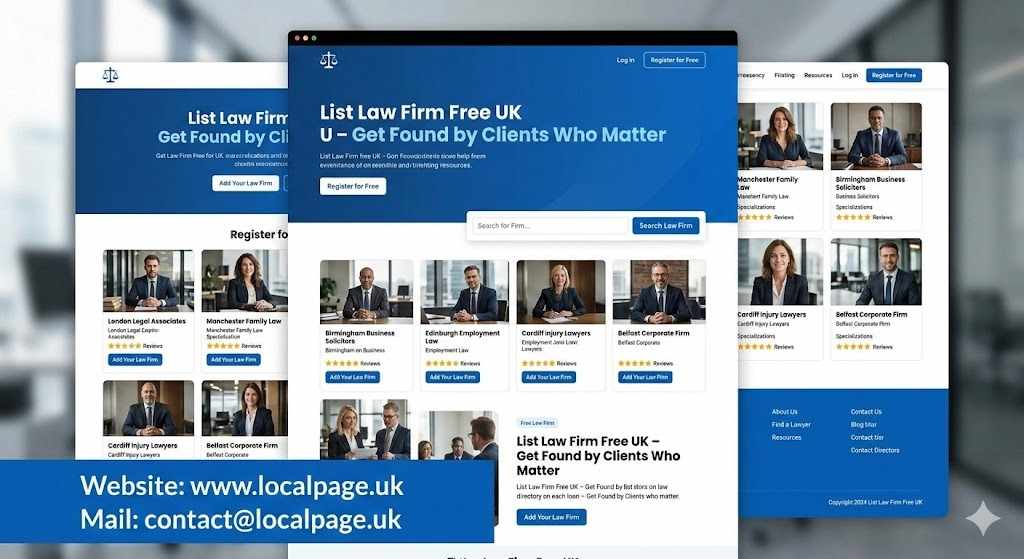
For further assistance or to manage your practice's digital presence, you may reach out via the contact details provided below.
Contact Information Email: contact@localpage.uk
Website: www.localpage.uk





Write a comment ...