
The legal landscape in the North West of England is undergoing a profound transformation as we move through 2026. For Merseyside law firms, the shift from traditional instruction methods to a digitally-integrated client journey is no longer a peripheral concern but a core strategic priority. Liverpool has long been a bastion of legal excellence, housing some of the UK’s most resilient commercial and private client practices. However, the convergence of regulatory transparency, shifting client demographics, and the rise of specialized legal directories has created a new set of challenges and opportunities for those practicing in the region.
What I'm observing across the UK legal sector is a marked departure from the "generalist" model. As Sarah Chen, partner at Chen & Co Solicitors, told me during a recent industry roundtable: "The modern client doesn’t just want a solicitor; they want a specialist who understands the specific nuances of their industry or personal situation. In Liverpool, this means firms must demonstrate their expertise long before the first phone call is made." This sentiment is backed by recent data; according to the Law Society's 2026 practice management survey, 73% of potential clients now research multiple solicitors before making initial contact.
The resilience of Merseyside law firms lies in their ability to blend historical prestige with modern accessibility. From the commercial hubs of Castle Street to the high-street practices in the surrounding boroughs, the demand for high-quality legal services UK remains robust. Yet, visibility is becoming increasingly competitive. To maintain a competitive edge, firms are having to reconsider how they present their professionals and their successes to a market that is more informed and more selective than ever before.
The current state of Merseyside law firms in the UK for 2026
The regional legal market in Liverpool is currently defined by a "flight to quality." For Merseyside law firms, the 2026 economic environment has necessitated a leaner, more focused approach to practice development. We are seeing a consolidation of mid-tier firms, while boutique practices specializing in niches like maritime law, life sciences, and digital intellectual property are thriving. The SRA's updated transparency rules have also leveled the playing field, forcing firms to be much clearer about their service delivery and expertise.
Structural changes in the Liverpool legal district
The physical footprint of the Liverpool legal scene is changing. While the historic commercial district remains the heart of the profession, many firms are adopting "hub and spoke" models. This allows for centralized specialist teams while maintaining satellite offices to serve the broader Merseyside community. This geographic flexibility is a key differentiator for firms looking to capture market share across the Liverpool City Region.
Impact of regulatory transparency on regional practice
Regulation has become a driver for better marketing. By being forced to disclose more information about their processes, firms have inadvertently discovered that transparency builds trust. The firms that have embraced this—providing detailed guides on what to expect during a case—are seeing higher conversion rates from initial enquiries.
The rise of boutique specialists in the North West
Liverpool is seeing a surge in "breakaway" firms—small teams of senior partners leaving larger organizations to set up specialized boutiques. These firms often rely heavily on legal services UK directories to establish their brand quickly without the massive overheads of a traditional full-service firm.
Digital adoption within traditional Liverpool partnerships
Even the most established firms in the city are now integrating AI and advanced practice management systems. However, the human element remains paramount. The digital tools are being used to automate the mundane, freeing up solicitors to focus on high-level strategic advice and client relationship management.
Evolution of client expectations in 2026
Clients in 2026 expect a seamless digital experience. They want to be able to upload documents securely, track the progress of their matters via a portal, and communicate with their legal team through various digital channels.
Integration of legal technology in case management
Case management is no longer just about tracking time; it’s about data analytics. Firms are using data to predict case outcomes and provide more accurate timelines to their clients, significantly improving the client experience.
Cybersecurity priorities for regional firms
With the increase in digital communication, cybersecurity has moved to the top of the risk register. Merseyside firms are investing heavily in secure client portals to protect sensitive information and maintain SRA compliance.
The role of hybrid working in talent retention
To attract the best talent, Liverpool firms are offering flexible working arrangements. This has allowed them to compete with London firms for high-quality associates who value the work-life balance offered by the North West.
How client acquisition has changed for legal professionals
The journey from "problem identified" to "solicitor instructed" has lengthened significantly. For Liverpool legal professionals, the initial discovery phase now happens almost exclusively online. 68% of potential clients value detailed practice area information during their initial research, often visiting a firm's website or directory profile multiple times before reaching out. This research-heavy phase means that if a firm's online presence is lacking in detail or expertise, they are disqualified before they even know the lead existed.
The shift from referral-only to multi-channel discovery
While word-of-mouth remains important, it is now often verified online. A recommendation from a friend is followed by a search for the firm's profile. If that profile doesn't match the recommendation's quality—featuring professional photography and clear service specialisms—the referral often dies on the vine.
Importance of practice area specialisation
Generalism is becoming a liability in digital search. Clients search for specific problems, such as "property dispute solicitors UK" or "intellectual property lawyers UK." Firms that clearly categorize their expertise on platforms like Local Page are finding it much easier to attract qualified leads.
Influence of client reviews and case studies
In 2026, 82% of clients expect to see case studies and representative work before making a decision. They want proof of competence. Merseyside firms that curate libraries of successful outcomes (suitably anonymized) are building much higher levels of pre-instruction trust.
Role of professional photography in building trust
Humanizing the firm is essential. High-quality, professional firm photography has been shown to increase enquiry rates significantly. It moves the firm from being a faceless entity to a team of approachable professionals.
Leveraging representative work for credibility
A well-documented case study demonstrates a firm's ability to handle complex matters. It provides a narrative that a potential client can relate to, making the legal process feel less intimidating.
Developing a consistent professional brand
Consistency across all digital touchpoints—from the firm’s website to various legal directories—ensures that the brand message is reinforced every time a client encounters it.
Utilizing video introductions for partners
Short video clips of partners explaining their approach to law can bridge the gap between a digital profile and a physical meeting. It allows the client to gauge the "fit" before the first consultation.
Establishing authority through legal articles
Regularly publishing insights on recent court rulings or legislative changes demonstrates that the firm is at the cutting edge of its practice area. This is a key signal for the E-E-A-T (Experience, Expertise, Authoritativeness, and Trustworthiness) criteria that search engines and clients value.
Why traditional legal directories no longer suffice
Historically, a directory listing was little more than a digital Yellow Pages entry. In the current market, however, these static listings fail to meet the needs of either the client or the law firm. Modern Merseyside law firms require platforms that act as an extension of their own website, offering interactive features and deep content integration. A simple name and phone number do not provide the "professional context" required to convert a high-value lead in 2026.
Limitations of static contact information
A phone number is not enough. Today’s clients want to engage on their own terms, often through direct messaging or enquiry forms that allow them to outline their issues in detail before a call.
Need for interactive engagement tools
Modern platforms must offer more than just text. They need to facilitate the exchange of information, whether through document downloads (like legal guides) or direct client enquiry forms that integrate with a firm's CRM.
Demonstrating expertise through content integration
A directory profile should be a living document. The ability to link to recent legal articles, webinar recordings, and news updates allows a firm to showcase its ongoing activity and expertise.
Importance of detailed service specialisms
Listing "Family Law" is too broad. A profile needs to drill down into specific sub-sectors like "Child Custody" or "International Divorce" to ensure the firm is found by the right clients and reduces irrelevant enquiries.
Transitioning from listings to practice profiles
A profile should tell a story. It should include a practice overview that explains the firm's philosophy and why they are the right choice for a specific matter.
Benefits of direct messaging with potential clients
Direct messaging allows for a low-pressure initial interaction. It can help qualify a lead quickly, ensuring that the firm's time is spent on relevant matters.
Role of client FAQs in reducing friction
By answering common questions—such as "what should I bring to my first meeting?"—a firm can reduce the barriers to entry for a new client.
Including professional social links for verification
Clients often use LinkedIn to verify a solicitor's professional background. Having these links integrated into a directory profile makes the verification process seamless.
A modern approach to legal practice visibility
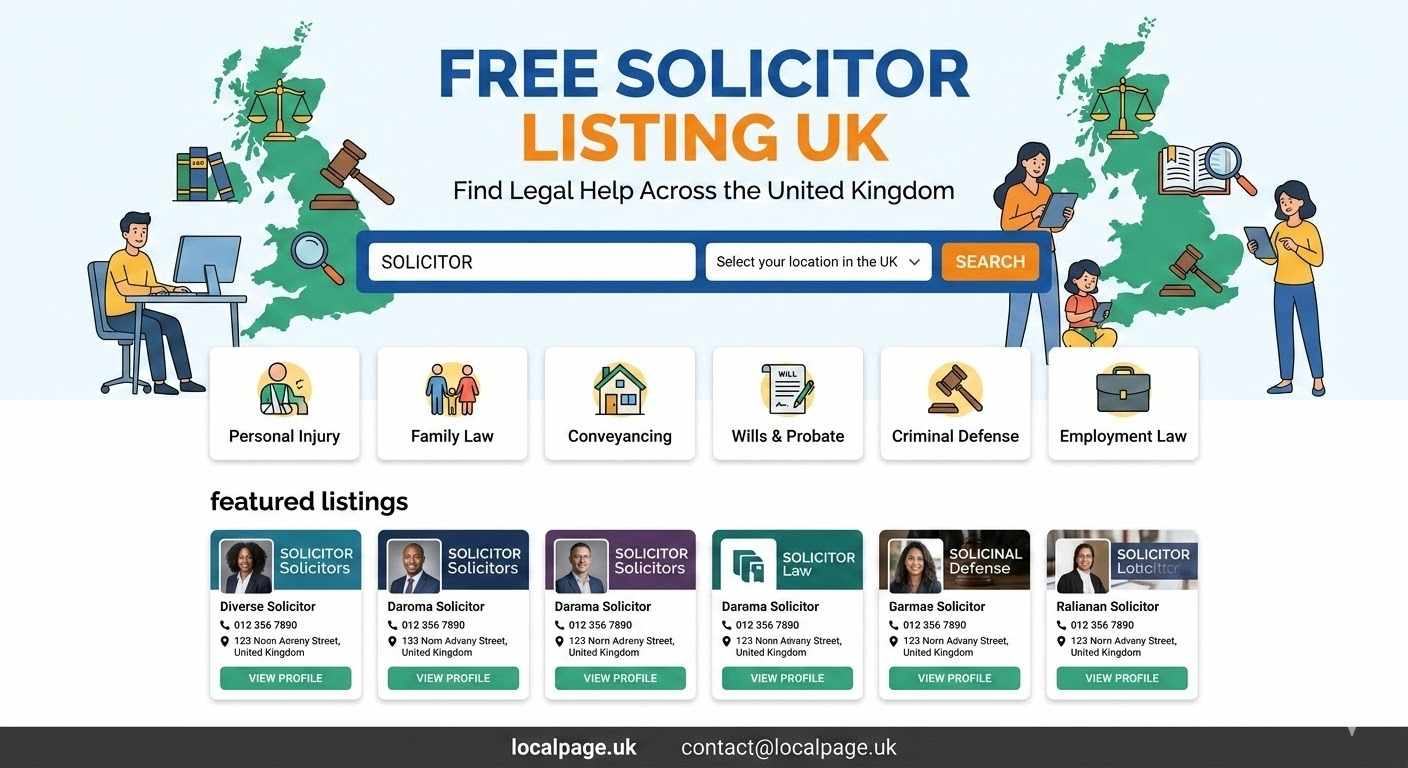
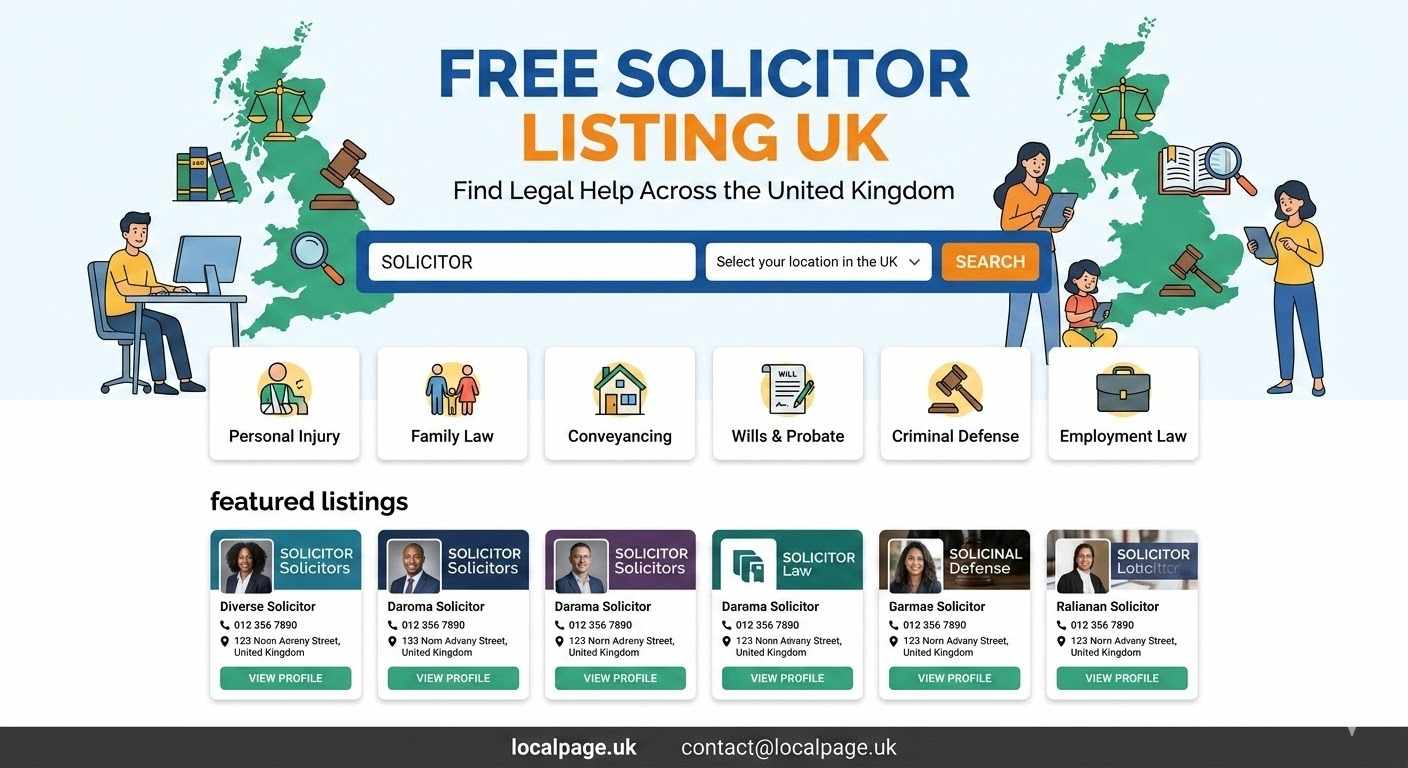
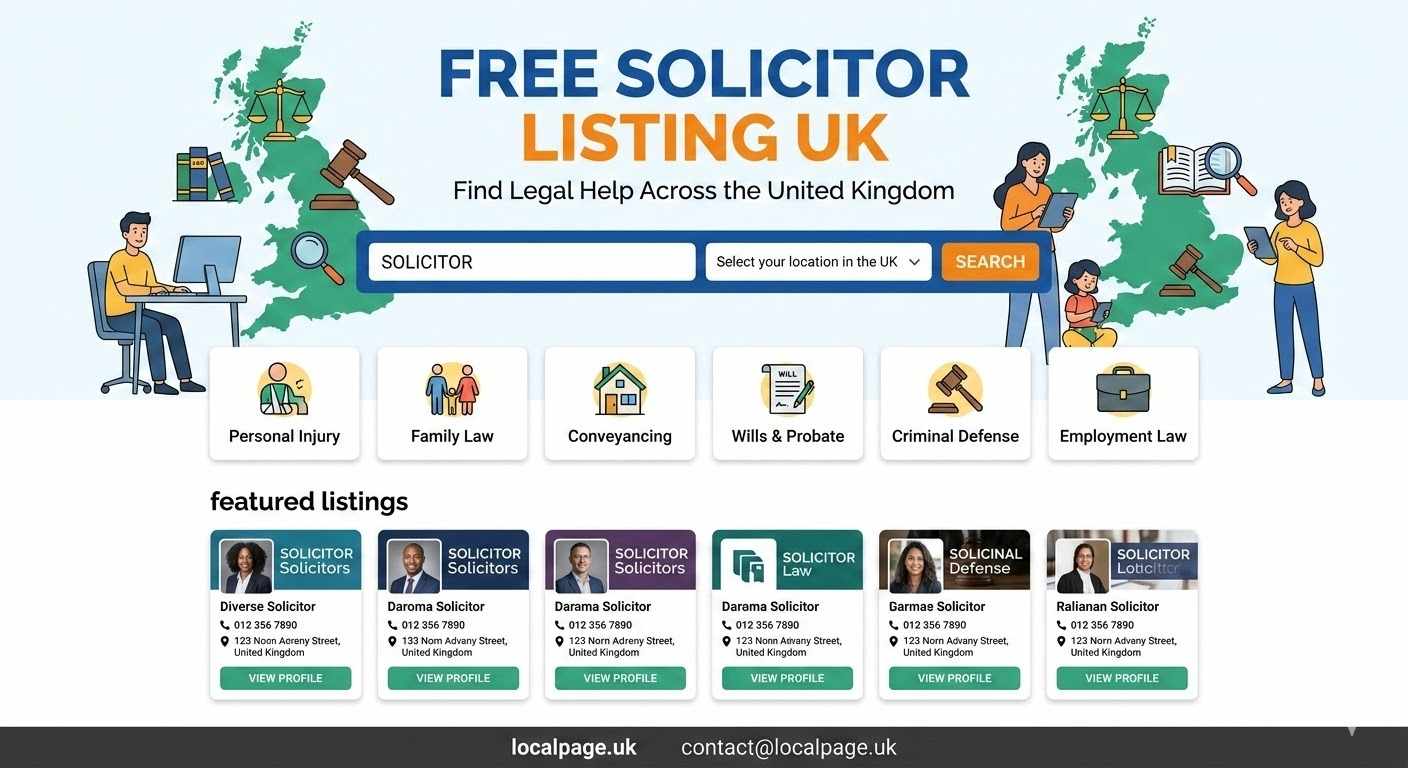
For Liverpool legal professionals, visibility is about being present where the client is looking. This requires a strategic presence on high-authority law firms UK platforms that understand the legal sector's specific needs. These platforms offer a "benefit matrix" that balances visibility with professional context, ensuring that firms are not just seen, but seen in the right way. This is particularly important for smaller firms that may not have the budget for massive SEO campaigns but can leverage the authority of a dedicated legal directory.
Enhancing practice-wide visibility through directories
Being listed on a reputable directory increases a firm's footprint. It provides an additional entry point for clients who might be searching for broader terms rather than a specific firm name.
Attracting qualified enquiries through professional context
When a firm is listed alongside its peers in a professional context, it validates its position in the market. It attracts clients who are looking for professional services, rather than just the cheapest option.
Building trust through expertise demonstration
By utilizing features like "legal articles" and "case studies," firms can prove their worth before the client even makes contact. This pre-built trust is invaluable in the high-stakes world of legal services.
Leveraging free listing options for practice development
For new or smaller practices, free lawyer listing UK options provide a way to build a digital presence without initial overhead. It allows firms to test the waters and see the quality of enquiries before committing further resources.
Optimizing the law firm profile overview
The overview should be concise but comprehensive. It needs to highlight the firm’s Unique Selling Point (USP) and speak directly to the client's needs.
Strategizing multiple practice area listings
Firms should ensure they are listed in every relevant category. A firm that handles both "Conveyancing" and "Wills and Probate" should have detailed profiles in both to capture different client intents.
Using document downloads as lead magnets
Providing free legal guides or checklists can be a great way to engage potential clients. It demonstrates value and establishes the firm as a helpful authority.
Promoting webinars and event listings
If a firm hosts events or webinars, these should be highlighted on their profile. It shows active engagement with the legal community and potential clients.
Case study: A Liverpool firm's experience
Consider the experience of a mid-sized commercial practice in Liverpool that shifted its focus toward digital specialized visibility in early 2025. Historically, they relied on traditional networking and a basic website. By late 2026, their approach had evolved. They began using a specialized solicitor directory free listing UK to host detailed profiles for each of their partners, complete with professional photography and specific case studies.
Initial challenges in digital client acquisition
The firm found that their general website was attracting too many irrelevant enquiries for small personal matters, while their commercial leads were stagnant. They lacked the "authority signals" needed to attract high-value business clients.
Strategy for specialized practice area growth
They decided to create distinct profiles for their "Employment Law" and "Commercial Litigation" teams. Each profile featured FAQs specific to business owners and links to articles they had written about recent changes in UK employment legislation.
Outcomes of improved online visibility
Within six months, the quality of their enquiries shifted. They saw a 40% increase in relevant commercial leads. Clients mentioned that the "Client FAQ" section on their directory profile had answered their primary concerns, making the first call much more productive.
Lessons learned for other Merseyside firms
The key takeaway was that "more traffic" isn't the goal; "better traffic" is. By providing professional context and demonstrating expertise, they filtered out irrelevant leads and built trust earlier in the cycle.
Measuring the quality of legal enquiries
Firms should track not just the number of calls, but the conversion rate of those calls into instructed matters. This identifies which platforms are providing the best ROI.
Adapting content based on client feedback
The firm noticed many clients asked the same three questions about employment tribunals. They added these to their FAQ section, which further improved the quality of their initial consultations.
Importance of regular profile updates
A static profile is a dead profile. By adding "Firm news and updates" monthly, they showed potential clients that the practice was busy and successful.
Peer networking and referral opportunities
The visibility on a professional platform also led to an increase in referrals from other solicitors who saw their specialized profiles and felt confident recommending them for specific matters.
Selecting the right platform for your practice
Choosing where to list your firm is a strategic decision. It is not just about being "on the internet"; it is about being in the right neighborhood. For Merseyside law firms, this means finding a platform that respects the professional nature of legal services while providing the tools needed for modern client engagement. The ideal platform should offer a balance of visibility, ease of use, and deep functionality—including the ability to showcase the E-E-A-T signals that are so critical in 2026.
Evaluating directory authority and relevance
Not all directories are created equal. A firm should look for platforms that rank well for specific legal terms and are recognized by potential clients as a trusted source of information.
Features to look for in a legal directory
A modern directory should offer more than just a listing. Look for "Video introduction capability," "Direct client enquiry forms," and the ability to host "Detailed service specialisms."
Integration with existing practice development
The platform should complement the firm's own website and social media presence, providing a consistent brand experience across the web.
Scalability and growth potential
As a firm grows, its online presence should be able to scale. A platform that allows for "Multiple practice area listings" and "Firm-wide visibility" is essential for long-term practice development.
Analyzing the user interface for potential clients
If the directory is hard for a client to navigate, they won't use it. The search functionality must be intuitive and the profiles easy to read on mobile devices.
Assessing the platform's commitment to the legal sector
Is the platform dedicated to legal services, or is it a general business directory? A dedicated platform will always provide better "professional context."
Understanding the value of professional social links
The ability to link to LinkedIn and other professional profiles is a simple but effective way to provide third-party verification of a solicitor's expertise.
Checking for SRA compliance and transparency tools
The platform should help, not hinder, the firm's compliance obligations, providing clear spaces for required regulatory information.
Strategic recommendations for UK solicitors
As we look toward the end of 2026, the successful Liverpool legal professionals will be those who view their digital presence as an ongoing conversation with their market. This requires a shift from "set and forget" marketing to a proactive approach to practice development. My recommendation is to focus on three pillars: Specialisation, Demonstration, and Accessibility. By clearly defining what you do, proving you can do it well, and making it easy for clients to find and contact you, you secure the future of your practice in an increasingly digital world.
Prioritizing niche expertise over generalism
In the digital space, being a "jack of all trades" makes you invisible. Focus on the areas where you have genuine, deep expertise and build your online presence around those.
Investing in high-quality professional content
Whether it is a case study, a legal guide, or an introductory video, the quality of your content reflects the quality of your legal advice. Do not cut corners on your professional presentation.
Utilizing data to refine client acquisition
Monitor which practice areas are attracting the most interest and adjust your content strategy accordingly. Use client feedback to populate your FAQ sections and article topics.
Embracing transparency as a trust-builder
Don't be afraid to explain your process. The more a client understands what you do and how you do it, the more comfortable they will be instructing you.
Developing a 12-month visibility roadmap
Plan out your content updates, photography sessions, and profile enhancements. A consistent drip-feed of activity is better than a once-a-year overhaul.
Training staff on digital client engagement
Ensure that everyone in the firm understands how to handle enquiries coming through digital channels, providing a professional and prompt response every time.
Monitoring competitor activity in the Liverpool market
Keep an eye on how other Merseyside law firms are presenting themselves. This can help you identify gaps in the market that your firm can fill.
Preparing for the future of legal search
As AI-driven search becomes more prevalent, the structured data provided by high-quality legal directories will become even more important for ensuring your firm is found.
Frequently Asked Questions
How do I choose the right solicitor for Merseyside law matters?
Choosing the right solicitor involves researching their specific expertise in the area of law you require. Look for firms that provide detailed practice area overviews and representative case studies. It is also beneficial to check their professional profiles on specialized legal services UK directories to see their track record and client FAQs.
What information should a law firm include in its directory profile?
A comprehensive profile should include a detailed practice overview, professional photography of the partners, a list of specific service specialisms, and anonymized case studies. Including a section for client FAQs and direct links to professional social media like LinkedIn also helps build significant trust with potential clients.
Are there free options for listing my legal practice?
Yes, many high-quality legal platforms offer free listing options. These are excellent for practice development, allowing firms to establish a presence, list their core practice areas, and receive direct client enquiries without an initial financial commitment.
How can I verify a solicitor's credentials and expertise?
You can verify a solicitor through the Solicitors Regulation Authority (SRA) Digital Badge or the Law Society’s "Find a Solicitor" service. Additionally, a well-maintained profile on a professional legal directory often provides links to their professional history, qualifications, and areas of accredited expertise.
What questions should I ask before instructing a solicitor?
You should ask about their experience in matters similar to yours, who will be handling your case on a day-to-day basis, what the typical timelines are for such cases, and how they prefer to communicate with their clients throughout the process.
How do solicitors typically structure their fees?
While we do not discuss specific pricing, solicitors generally work on fixed fees, hourly rates, or "no win, no fee" arrangements depending on the practice area. Transparency regarding how fees are calculated is a requirement under SRA rules, and firms should provide this information clearly during initial discussions.
What should I expect during an initial consultation?
During an initial consultation, the solicitor will listen to the details of your situation, provide a preliminary assessment of your legal position, and outline the potential steps forward. It is a time for both parties to determine if they are a good fit for working together.
How long do Merseyside legal matters usually take?
Timelines vary significantly by practice area. A straightforward residential conveyancing matter might take 8-12 weeks, while complex commercial litigation or family law disputes can take several months or even years. A good solicitor will provide a realistic timeline based on the current court schedules in Liverpool.
Can I switch solicitors if I'm not satisfied?
Yes, clients have the right to switch solicitors at any time. If you feel your current firm is not meeting your expectations, you can instruct a new firm, which will then arrange for the transfer of your files. It is important to review your initial engagement letter regarding any outstanding work.
How do I arrange an initial discussion with a specialist solicitor?
Most modern firms make this easy through direct client enquiry forms on their website or directory profiles. You can often send a brief message outlining your needs, and a member of the specialist team will contact you to arrange a formal discussion.
For further assistance or to manage your practice's digital presence, you may reach out via the contact details provided below.
Contact Information Email: contact@localpage.uk Website: www.localpage.uk







Write a comment ...